


If you’re a martial arts enthusiast or considering taking up judo or jiu-jitsu, you’ve probably already heard of kimonos, also known as “gis”, “judogis or “jujitsugi”.. These traditional outfits are essential in these disciplines, but it’s important to note that there are significant differences between judo and jiu-jitsu kimonos. In this article, we’ll explore these differences to help you choose the right kimono for your practice.
The Judo and Jiu Jitsu Kimono Cup
One of the most obvious distinctions between judo and jiu-jitsu kimonos is their cut. Judo kimonos are generally fuller and heavier than jiu-jitsu kimonos. This ample cut allows judokas to grip their opponent more easily and perform projection techniques.
Jiu-jitsu kimonos, on the other hand, fitcloser to the body. They have longer sleeves and tighter pants to allow greater freedom of movement in ground grappling and submission techniques. This snug fit promotes mobility, which is essential for jiu-jitsu practitioners. The sleeves of the jiu-jitsu kimono are tighter, making the kimono more difficult for the opponent to grip.
The materials used
Another major difference lies in the materials used to make the kimonos. Judo kimonos are generally made from cotton and polyester, thick and robust to withstand the dynamic movements and grips of judo. They are also reinforced at strategic points to prevent tearing.
In comparison, jiu-jitsu kimonos are made of lighter cotton, making them more comfortable and better suited to ground movements. They are designed to be tough yet flexible. This is particularly important given the nature of jiu-jitsu, which often involves ground fighting and complex positions. Jiu Jitsu kimono pants are made from Ripstop, a virtually tear-proof material used for parachute fabrics.
The colors
Judo and jiu-jitsu kimonos also differ in terms of color. Judo kimonos follow a strict color code, with classic white kimonos. For high-level competitions, judokas may be required to wear a white or blue judogi.
In jiu-jitsu, kimonos are generally white, blue or black, but there’s more freedom when it comes to colors and markings. Discover our Brazilian Jiu Jitsu kimonos, available in 3 colors: white, black and khaki.
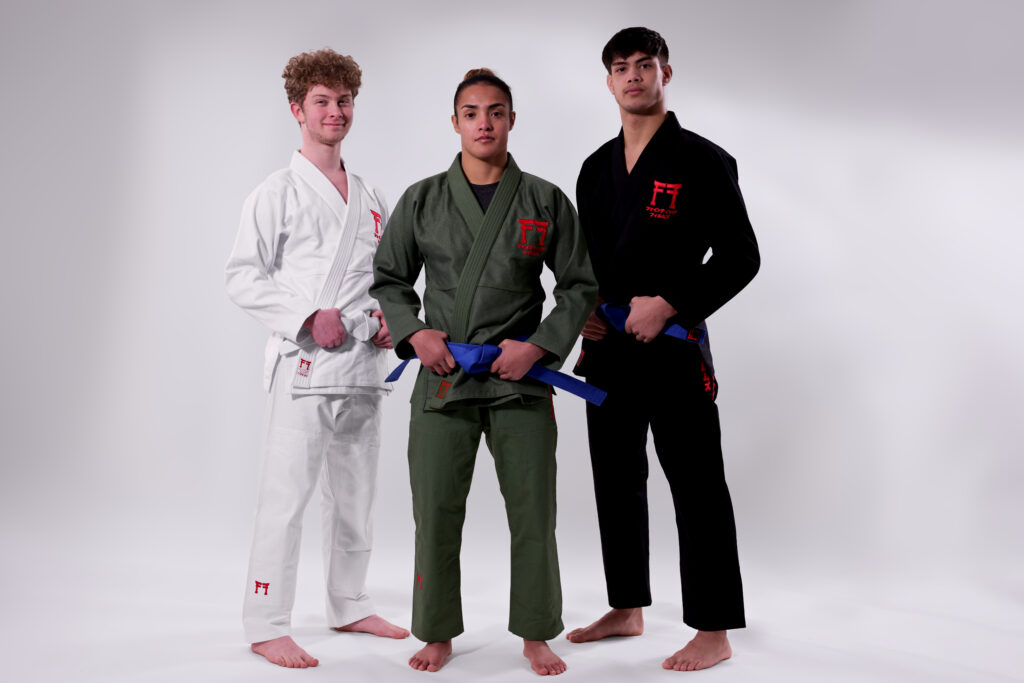
Brazilian jiu-jitsu kimono
Customization of judo and jiu jitsu kimonos
Jiu-jitsu also shines through its patches and embroidery, which are often personalized for each school or team. Jiu-jitsu kimonos are often adorned with these elements to show the practitioner’s affiliation with a specific team. Unlike judo kimonos, which are more sober and adhere to stricter competition rules.

In summary, although judo and jiu-jitsu kimonos have basic similarities as traditional combat outfits, there are significant differences in terms of cut, material, color and personalization. The choice between the two will depend on your preferred discipline and personal preferences.
In any case, the importance of choosing a quality kimono should not be underestimated, as it plays a crucial role in your performance on the tatami. Make sure you choose the one that best suits your practice and individual needs.
If you’re looking for high-quality kimonos for judo or jiu-jitsu, don’t forget to check out the impressive selection of kimonos available at www.fightingfilms.shop, where you’ll find options tailored to your specific needs.
Not sure which kimono model or size you want? Visit our boutique at 1 rue des Messageries, 75010 Paris, Monday to Friday, 10am to 6pm.


